
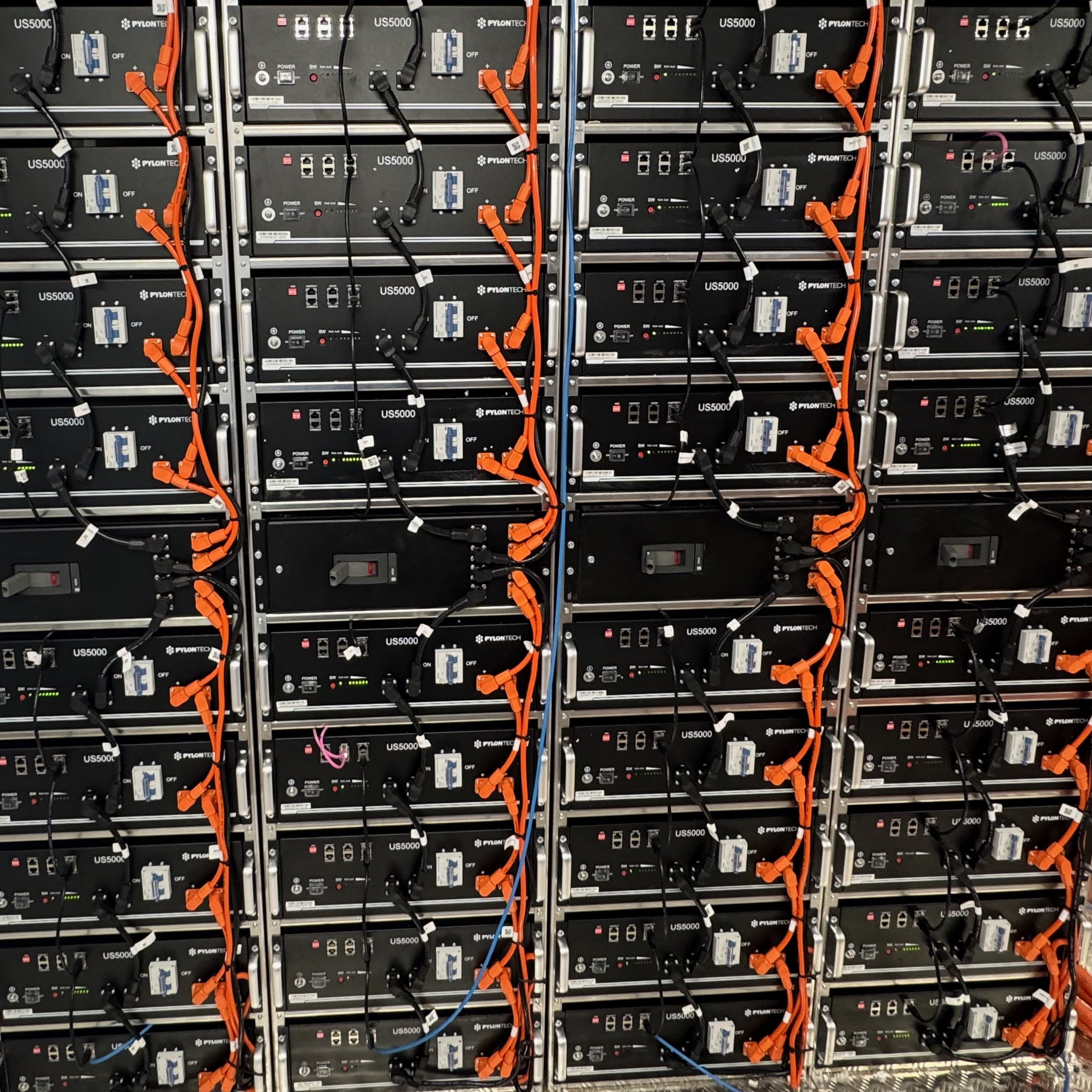
We are putting the finishing touches on a substantial battery upgrade at The Vale at the moment. The old Redflow based 280kWh battery array has been removed, and replaced with almost 400kWh (80 modules) of Pylontech US5000 units.
This is because of the demise of Redflow, a company I put a great deal of time, effort and money in to, over a very long period.
The 28 x ZBM2 array at The Vale did alright for some years, but the time has come to swap in something that I can obtain ongoing support for.
Hence the deployment of 80 x Pylontech US5000 modules – which are now up and running.
The Redflow array was inside our main farm building, inside a wooden room… because Redflow ZBM’s are super-resistant to fire (to creating it, or to amplifying a fire around them).
Because the worst case with Lithium batteries is an ugly exothermic chemical fire, these new modules have been built in to custom-wired, insulated, shipping container (to create a physically separate ‘module’ beside our main farm shed building). The container is cabled back in to the very same Victron Energy system that was built around the previous Redflow batteries.
I’ll write more about this updated system later, and provide some more photos of it… but it felt like the right time to briefly note that things have changed in this regard at The Vale.
 Simon Hackett
You must be logged in to post a comment.